Time: 2023-2026
Location: r/place (& spatially everywhere)
Advisor: Prof. Joseph Godlewski
Location: r/place (& spatially everywhere)
Advisor: Prof. Joseph Godlewski
In-Progress Undergraduate Thesis with Funding through The SOURCE @ Syracuse University
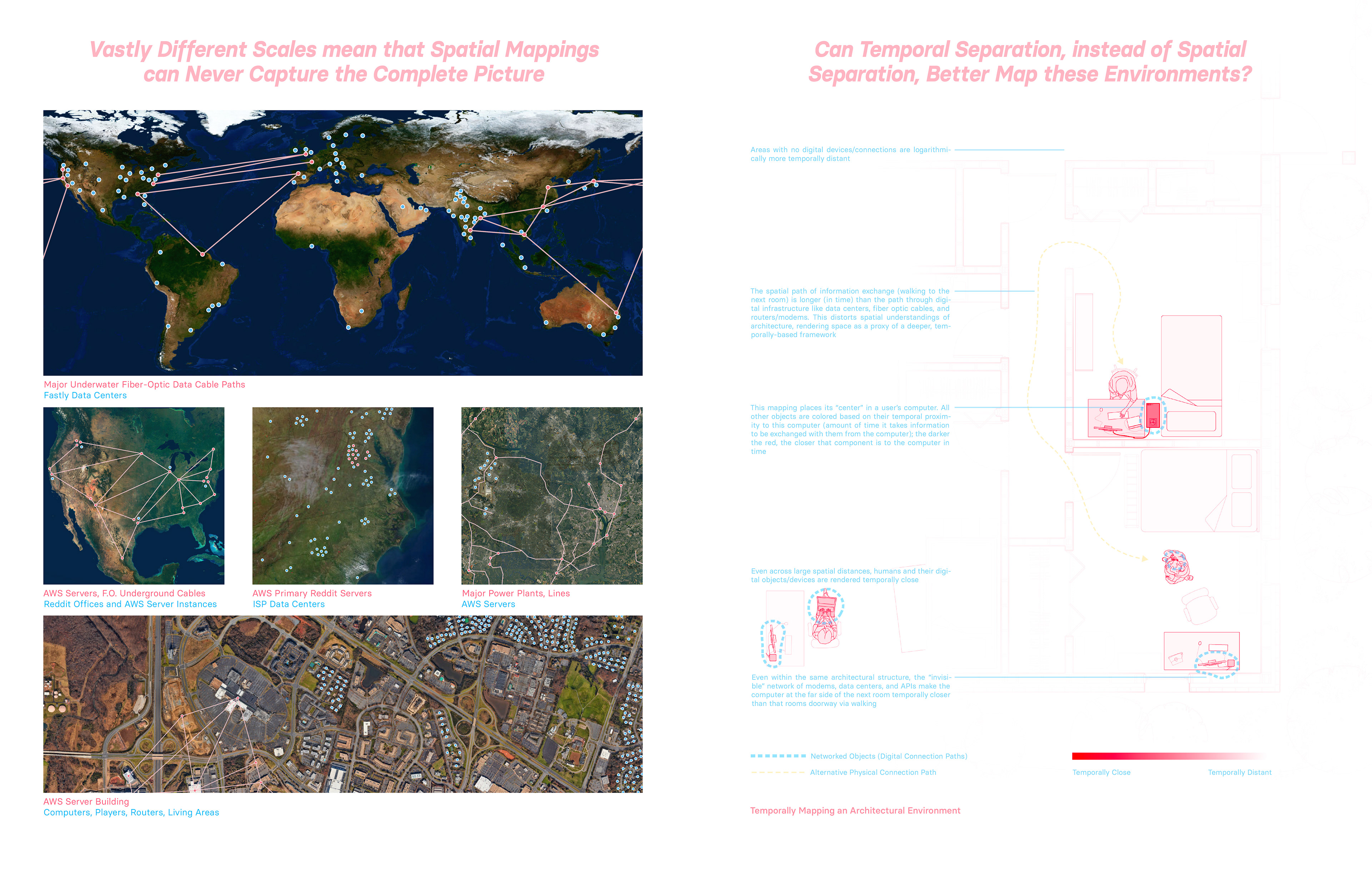
Architecture neglects advances in digital technologies and virtual worlds, resulting in inconsistencies where physical space and virtual realities overlap. Cartesian mapping, perspectival frameworks, and a reliance on pure “space” are no longer useful in visualizing and understanding these new geometries of reality. From video games to mobile phones, virtual interfaces connect across vast spatial distances, resulting in environments where an individual is “closer” to their friend who just texted from halfway across the world than they are to a person sitting in the room next door. Time emerges as a metric which better captures these spatial inconsistencies and leaps.
Assembly Theory, developed by Lee Cronin and Sara Walker, transforms the “object” from a discretely-bound spatial entity into a lineage connecting the present-object to every other form it has had since the beginning of time and all the environments that helped assemble it along the way. As a result, these Time-Objects operate as if space is a proxy, and are concerned instead with temporal locality and temporal separations.
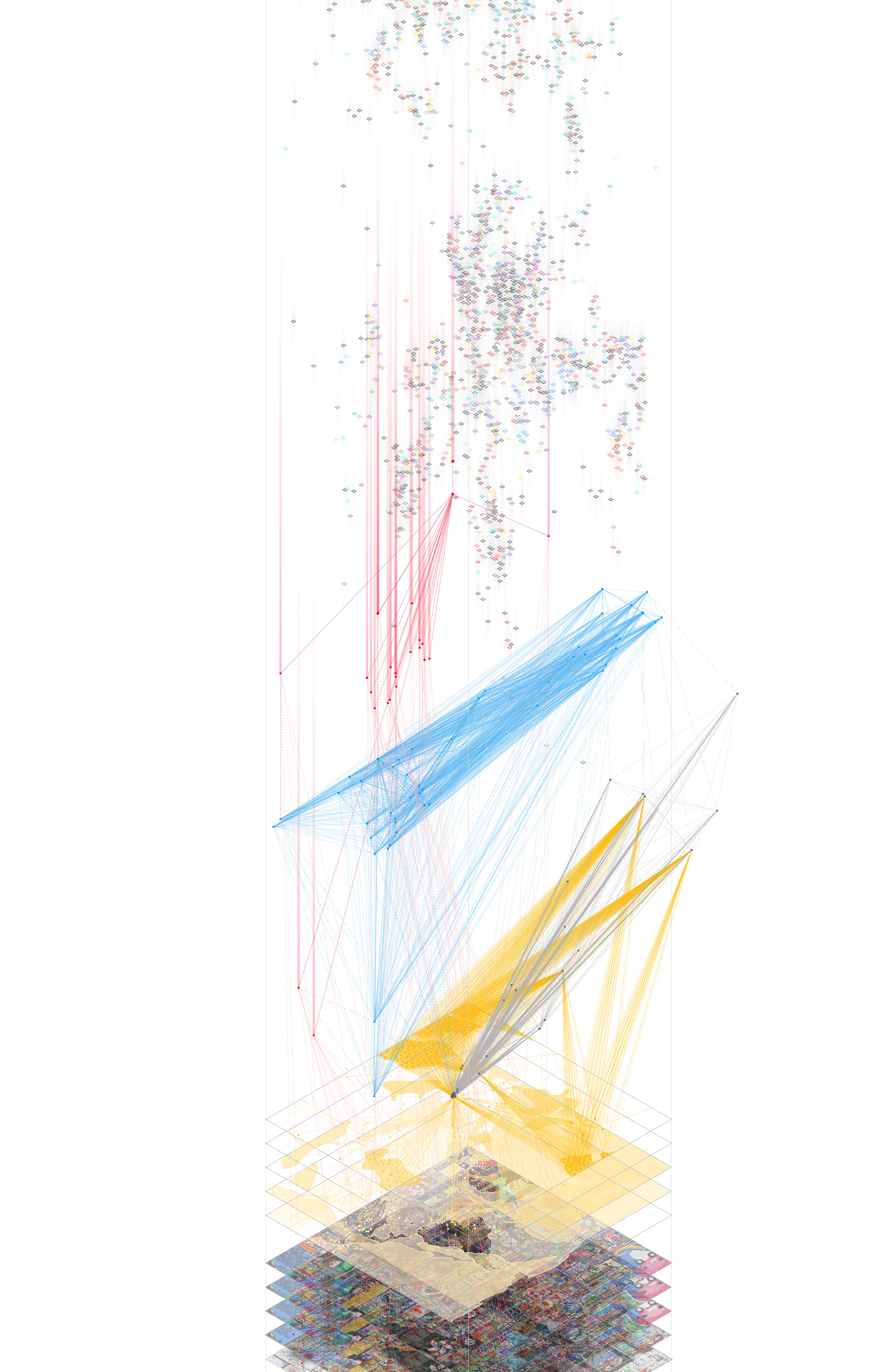
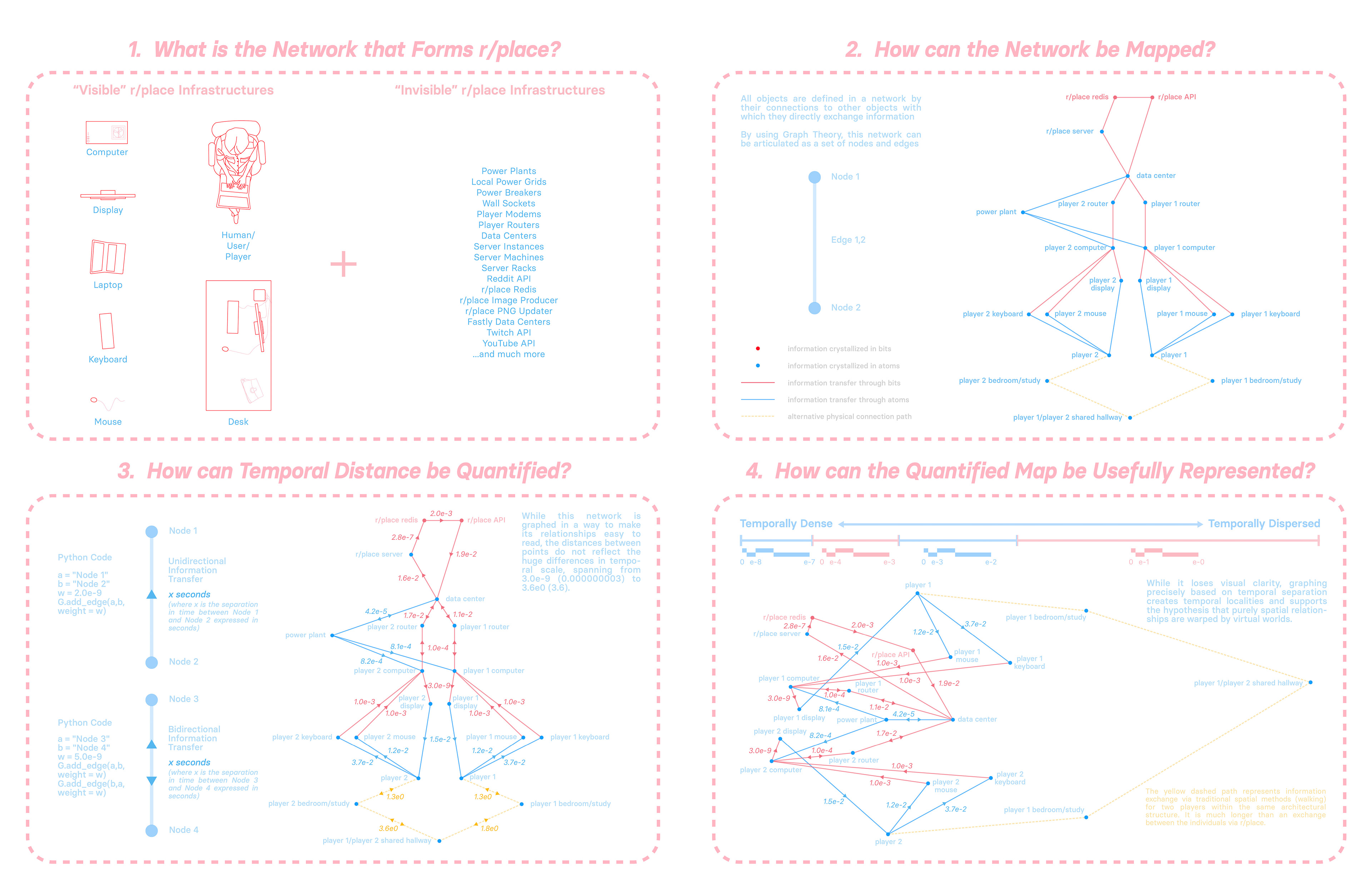
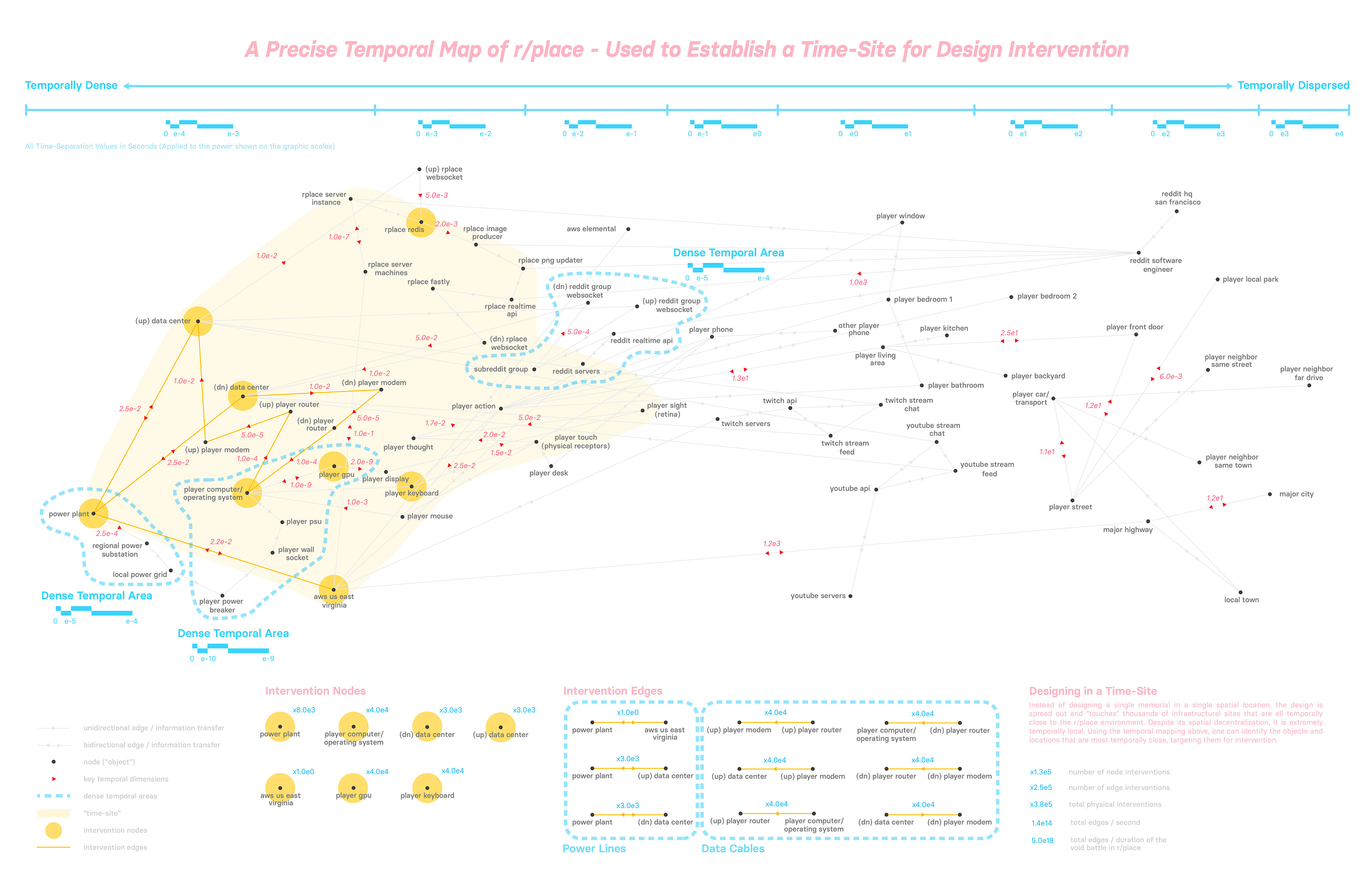
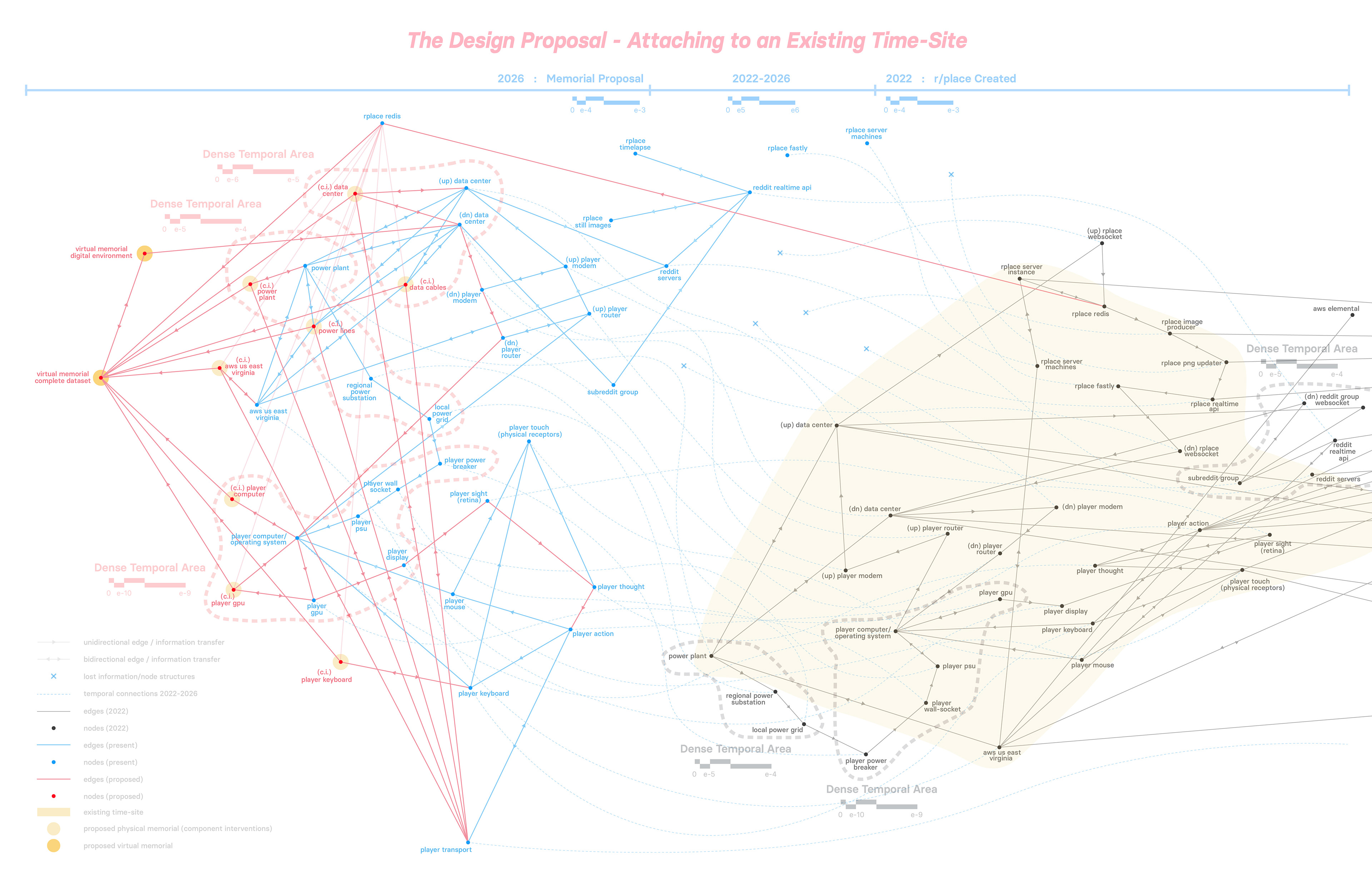
The architectures of temporal locality are centered around Time-Sites. Instead of precisely-bound spatial parcels, interventions stretch across times and spaces, spanning continents and decades while remaining discrete, map-able, and design-able. By mapping complex Time-Objects with graph theory and vector embedding, designers can diagram connections, gaps, and hubs - defining a specific temporal geometry which will ultimately structure their physical and virtual interventions.
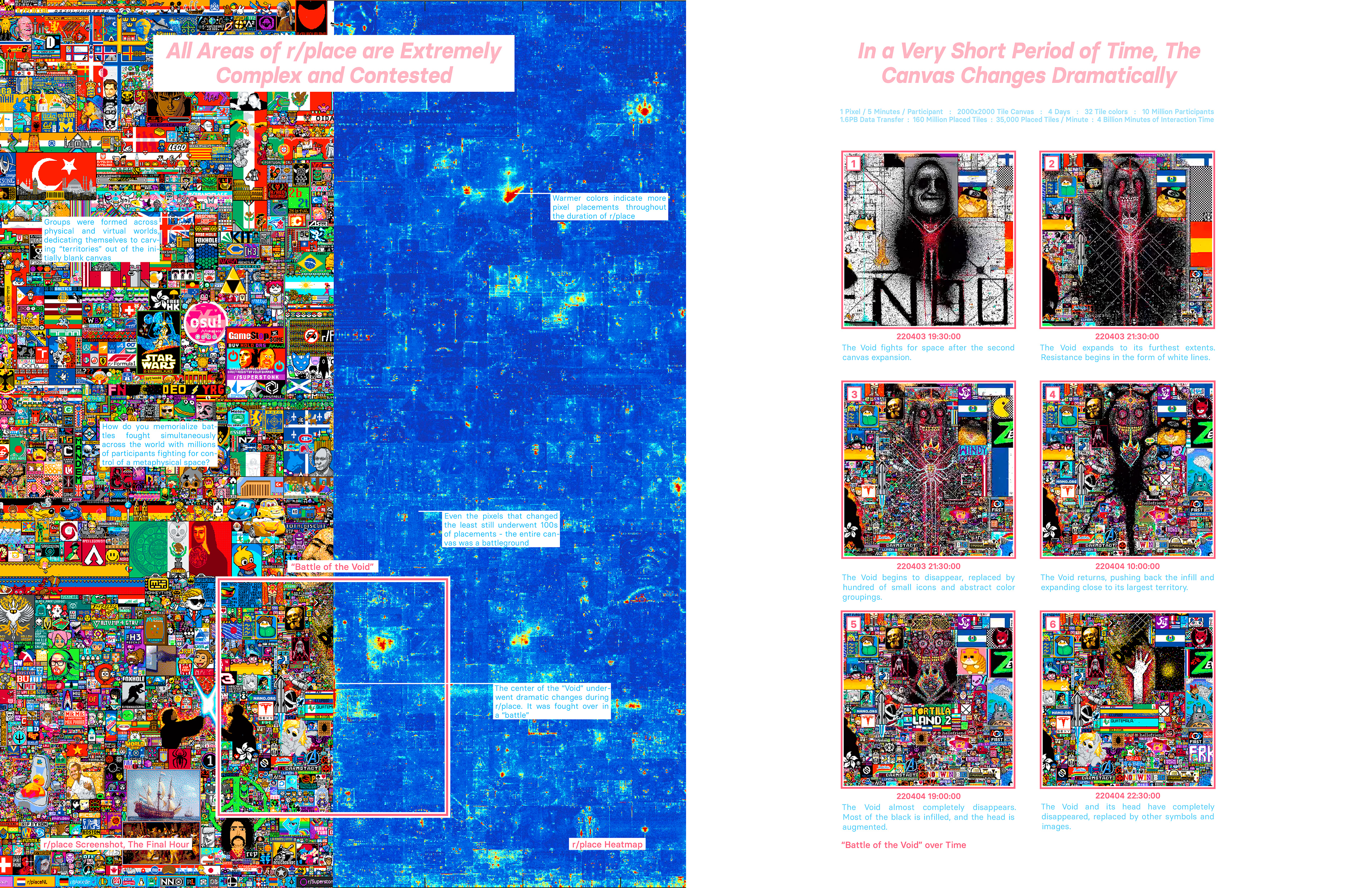
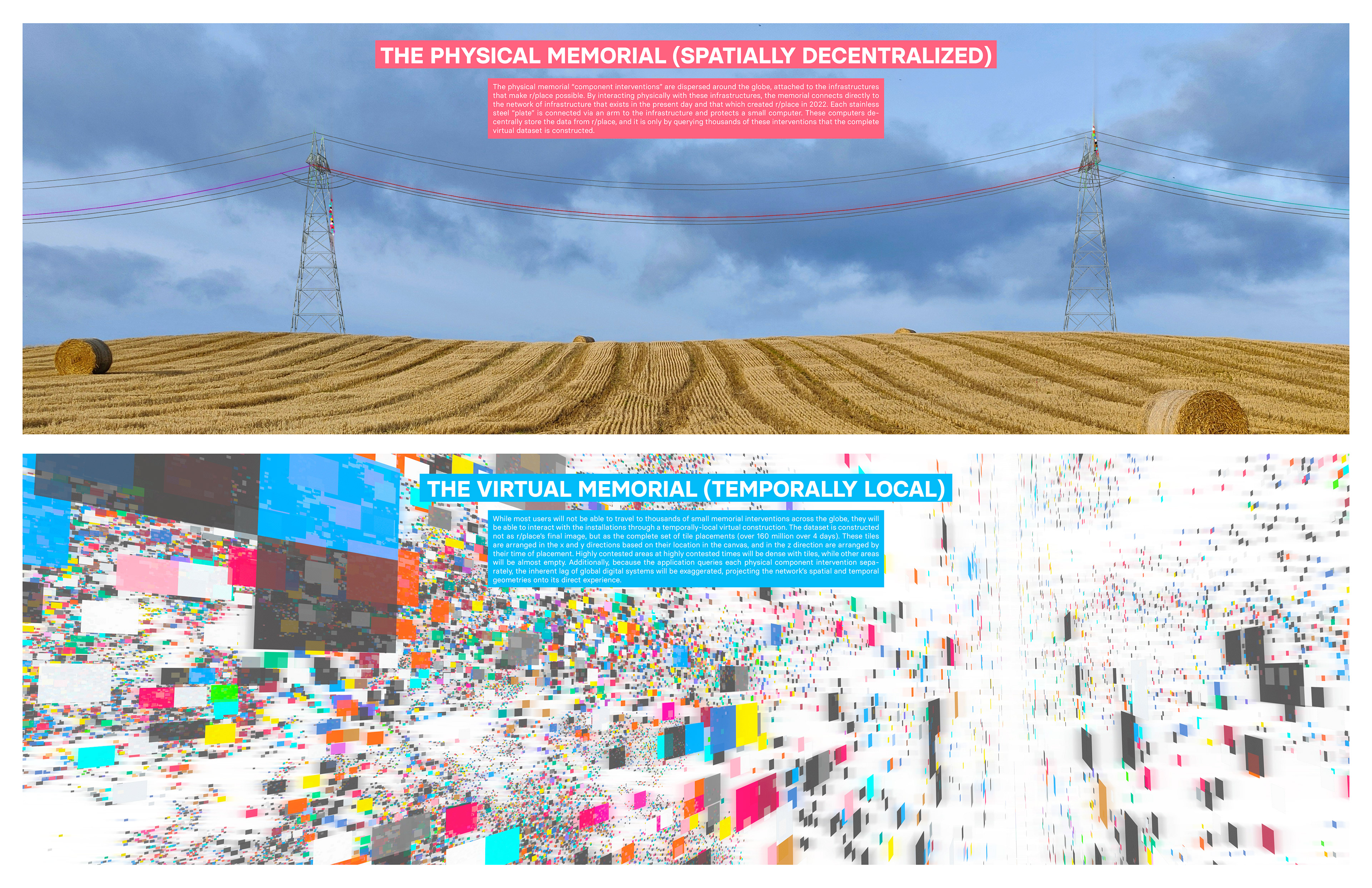
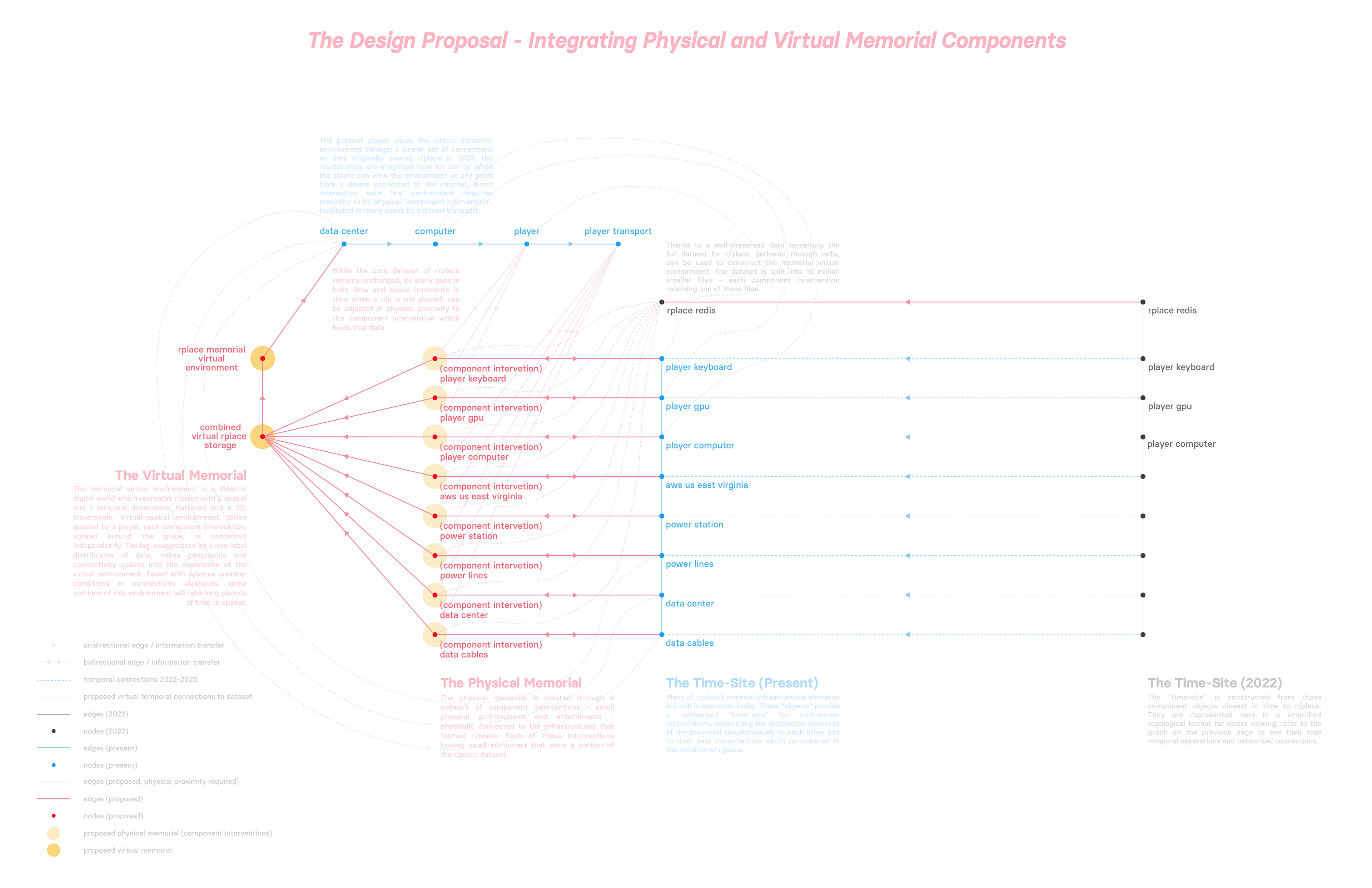
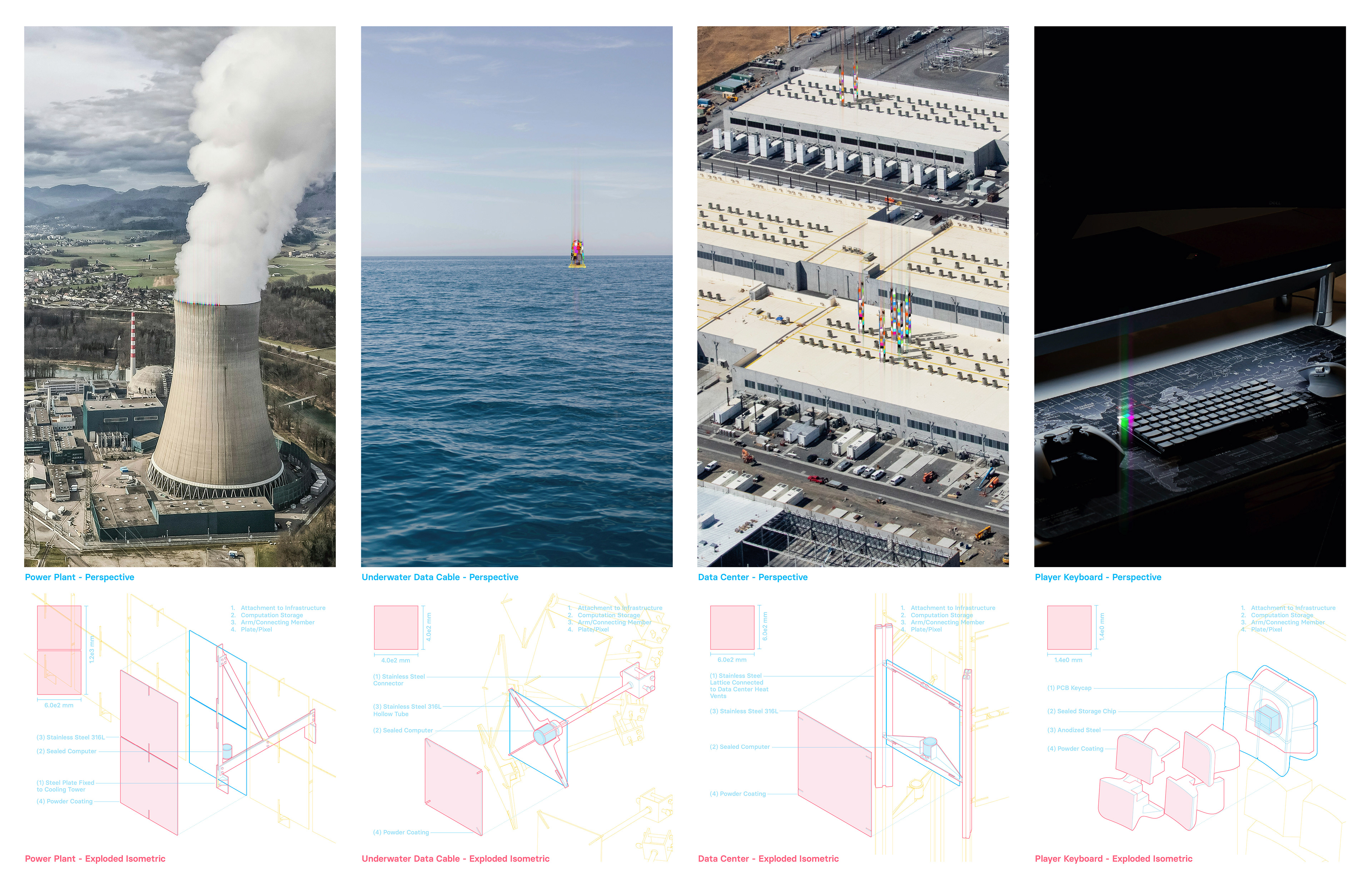
This thesis takes ”r/place” as its Time-Object of focus; documenting, mapping, and exploring its temporal forms before intervening to design a memorial to the battles that raged across its canvas. This memorial is not spatially local nor is it entirely formed from physical structures - it instead dances across physical environments, virtual worlds, and times as an architecture of temporal locality.