Semester: Summer 2025
Location: New York, NY
Collaborators: Autumn Chu, Yao Xiao
Location: New York, NY
Collaborators: Autumn Chu, Yao Xiao
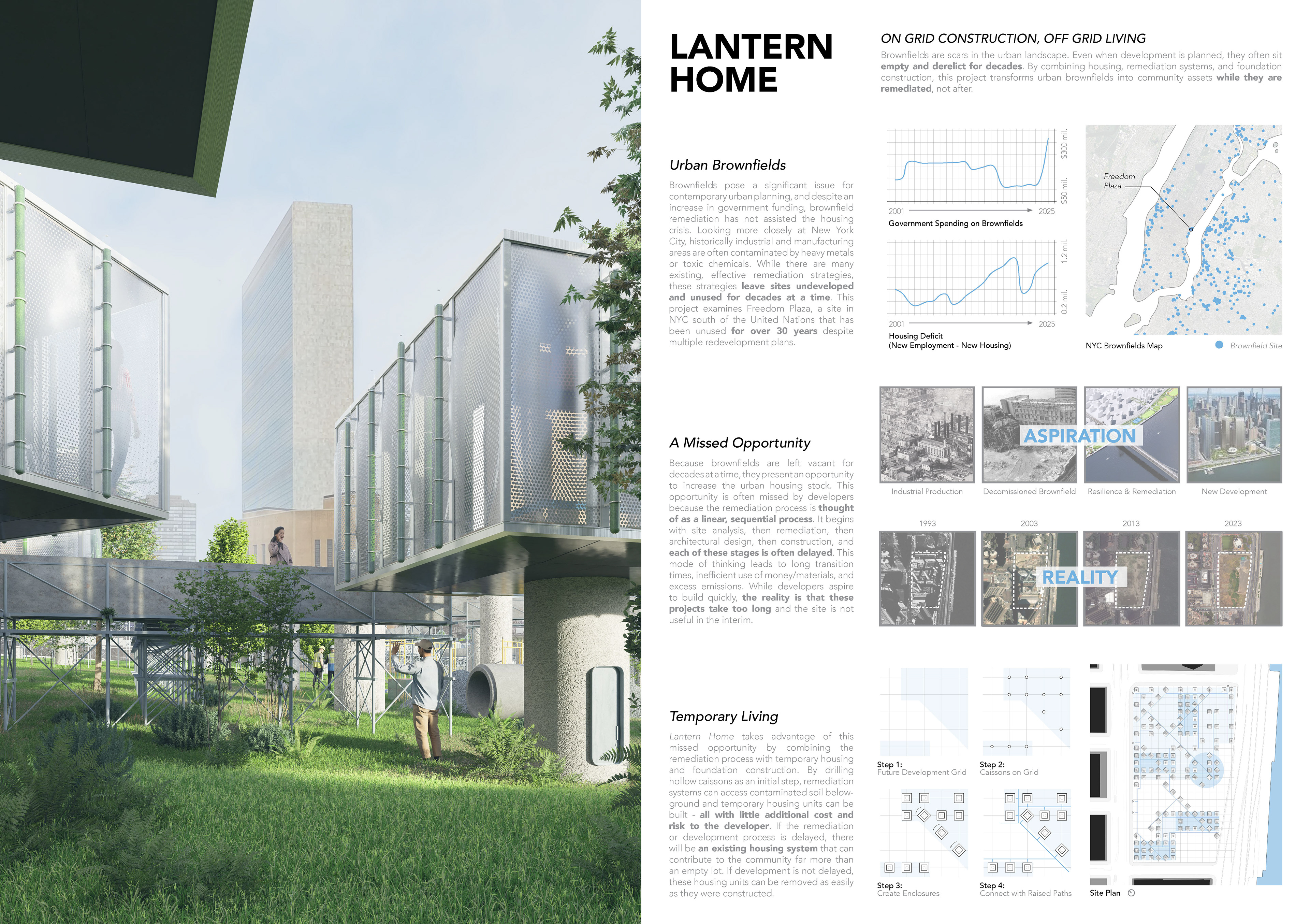
Brownfields are scars in the urban landscape. Even when development is planned, they often sit empty and derelict for decades. By combining housing, remediation systems, and foundation construction, this project transforms urban brownfields into community assets while they are remediated, not after.
Urban Brownfields: Brownfields pose a significant issue for contemporary urban planning, and despite an increase in government funding, brownfield remediation has not assisted the housing crisis. Looking more closely at New York City, historically industrial and manufacturing areas are often contaminated by heavy metals or toxic chemicals. While there are many existing, effective remediation strategies, these strategies leave sites undeveloped and unused for decades at a time. This project examines Freedom Plaza, a site in NYC south of the United Nations that has been unused for over 30 years despite multiple redevelopment plans.
A Missed Opportunity: Because brownfields are left vacant for decades at a time, they present an opportunity to increase the urban housing stock. This opportunity is often missed by developers because the remediation process is thought of as a linear, sequential process. It begins with site analysis, then remediation, then architectural design, then construction, and each of these stages is often delayed. This mode of thinking leads to long transition times, inefficient use of money/materials, and excess emissions. While developers aspire to build quickly, the reality is that these projects take too long and the site is not useful in the interim.
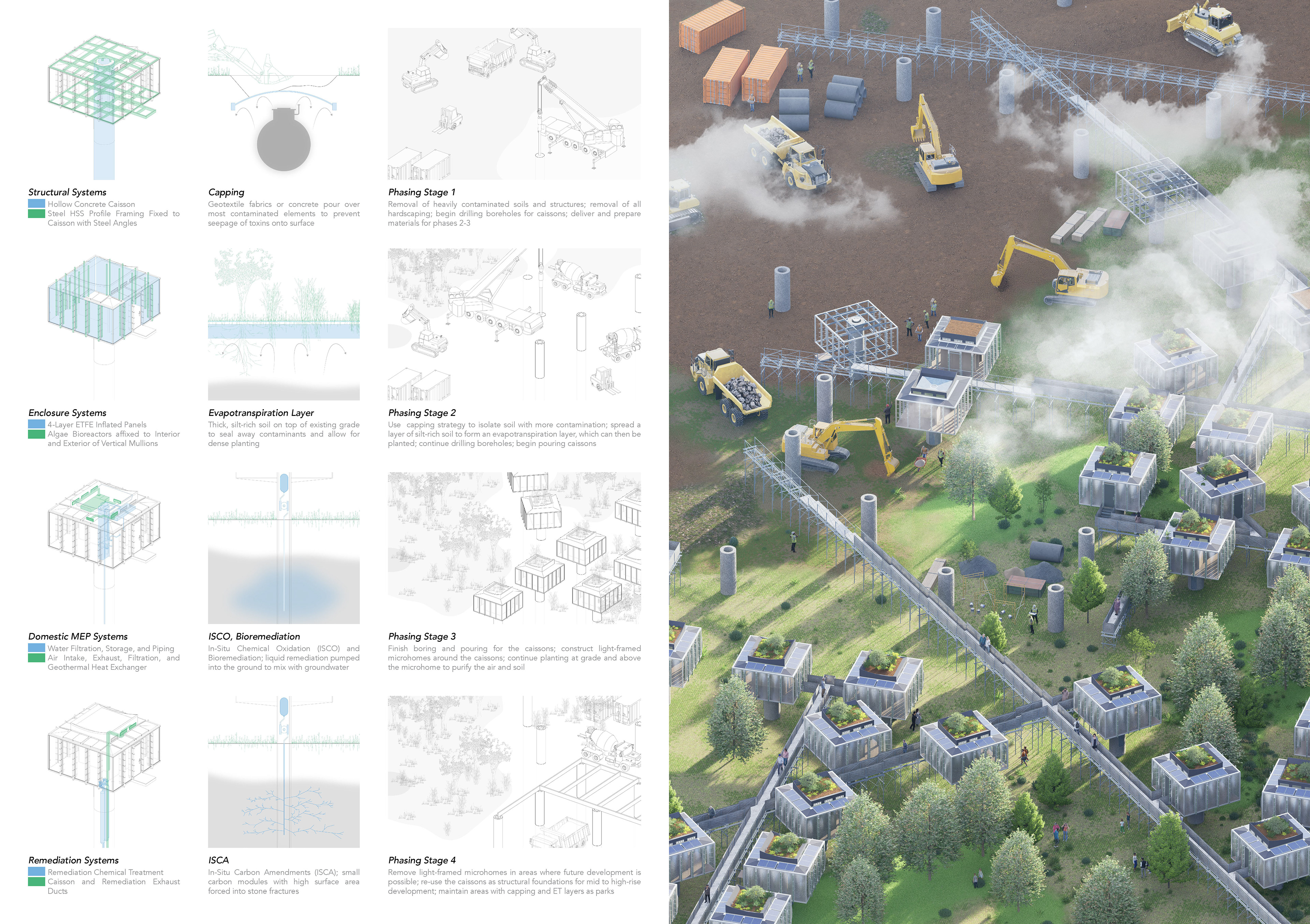
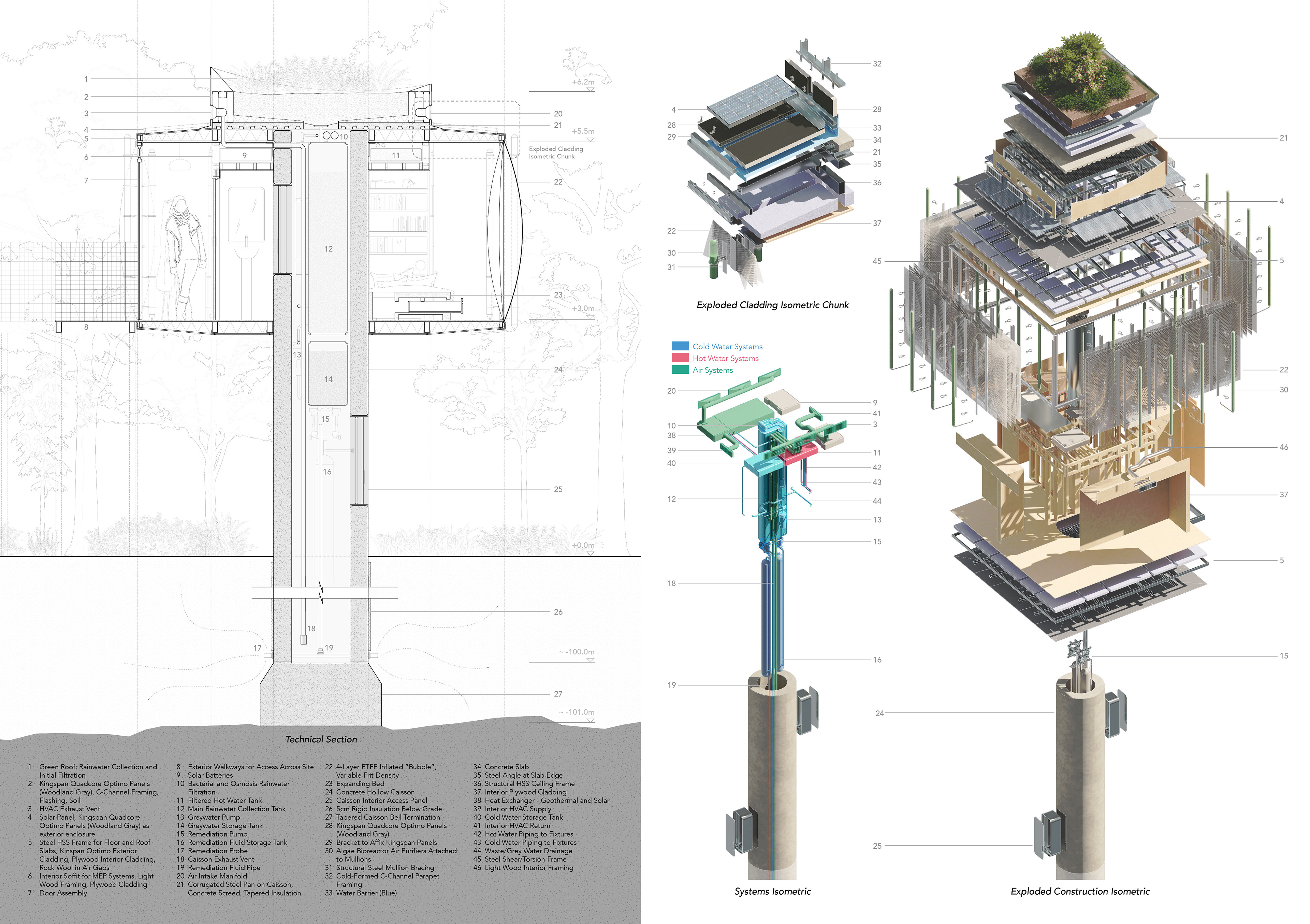
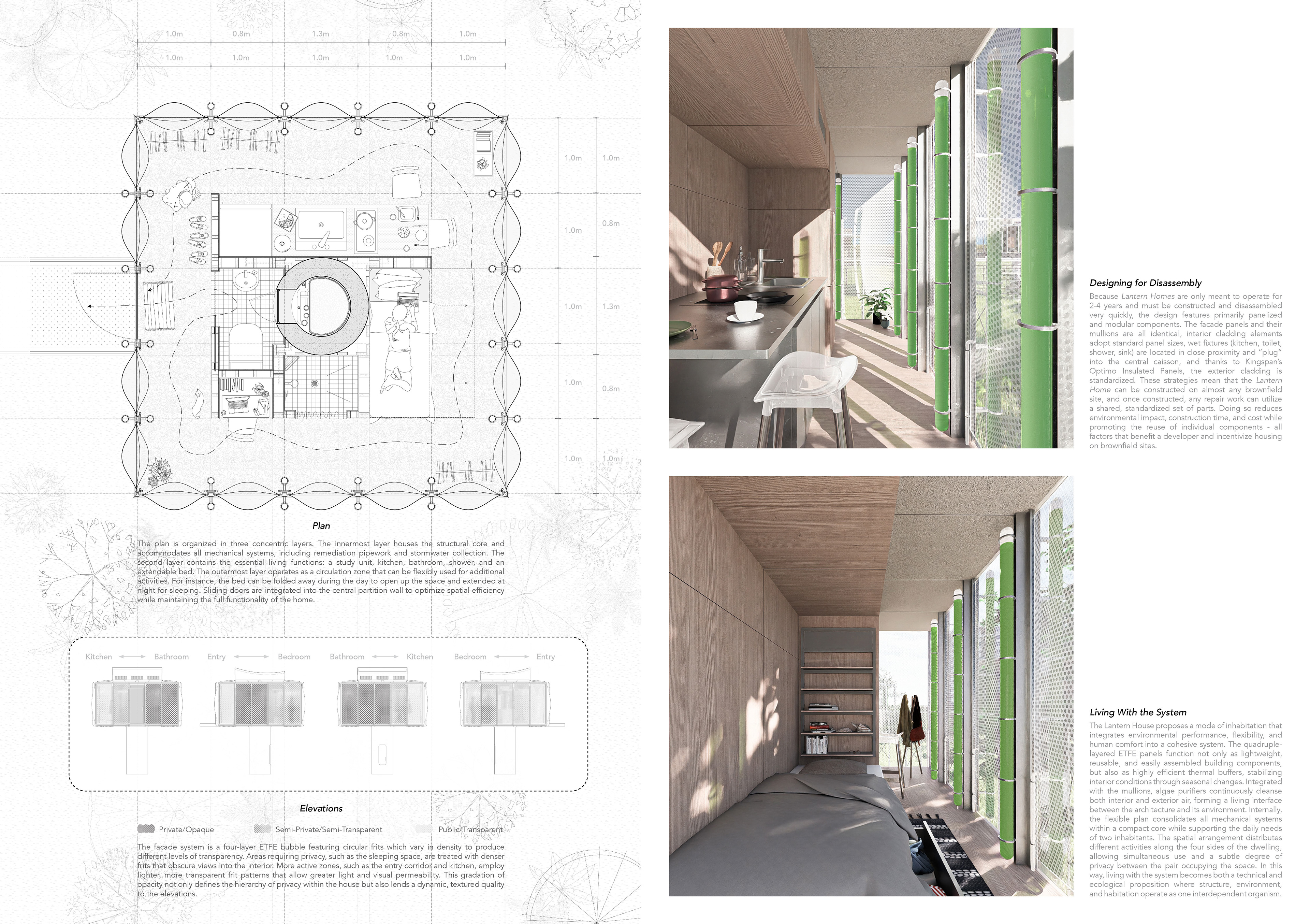
Temporary Living: Lantern Home takes advantage of this missed opportunity by combining the remediation process with temporary housing and foundation construction. By drilling hollow caissons as an initial step, remediation systems can access contaminated soil belowground and temporary housing units can be built - all with little additional cost and risk to the developer. If the remediation or development process is delayed, there will be an existing housing system that can contribute to the community far more than an empty lot. If development is not delayed, these housing units can be removed as easily as they were constructed.